
The Missing Link in Digital Dentistry: Helping Patients See What Dentists See
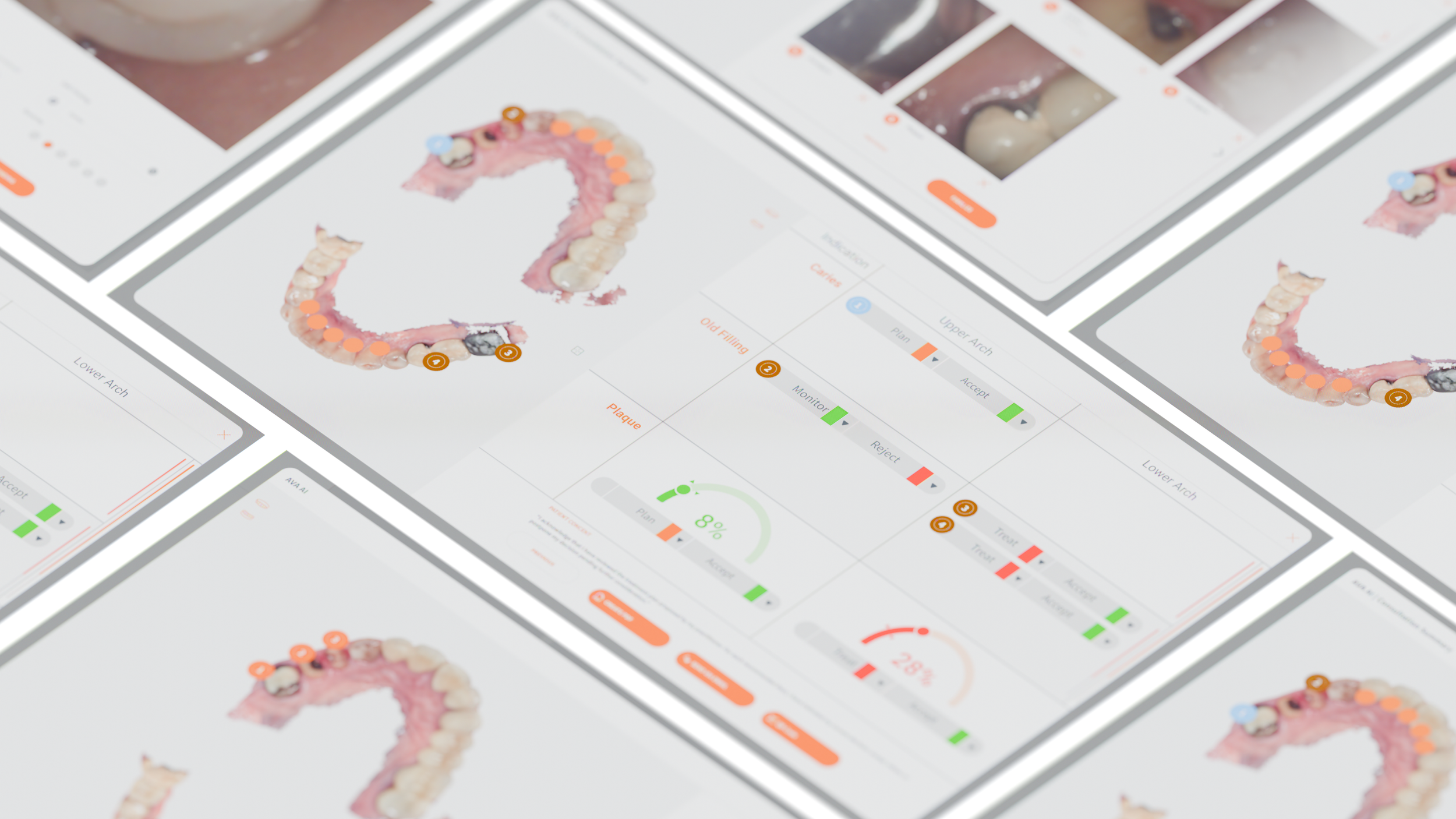
Dentistry has undergone an extraordinary digital transformation.
Digital radiography, intraoral scanners, CBCT, CAD/CAM, and artificial intelligence have changed how clinicians capture information, evaluate conditions, plan treatment, and deliver care.
Yet despite all this technology, one surprisingly old problem remains:
The dentist can see the problem. The patient often cannot.
A dentist can look at a radiograph, intraoral image, or digital scan and quickly recognize an area that may require further evaluation. Years of education and clinical experience allow clinicians to understand what they are seeing almost instinctively.
Patients do not have that training.
We can point to an area on a radiograph and carefully explain what it means, but to the patient it may still look like different shades of gray. We can show an intraoral scan, but that does not necessarily mean the patient understands the clinical significance of what is being discussed.
This creates an interesting contradiction in modern dentistry: we have become exceptionally good at acquiring clinical information but communicating that information to patients remains challenging.
AVA was designed to help bridge that gap.
From Clinical Information to Patient Understanding
Developed by 3DISC, AVA is an AI Trust Platform designed to improve patient communication and support treatment acceptance. Rather than functioning simply as another scanning solution, AVA brings digital image acquisition, AI-powered 2D-3D visualization, structured clinical review, and patient communication into one practical workflow.
The idea behind it is simple:
Help patients see what their dentist sees.
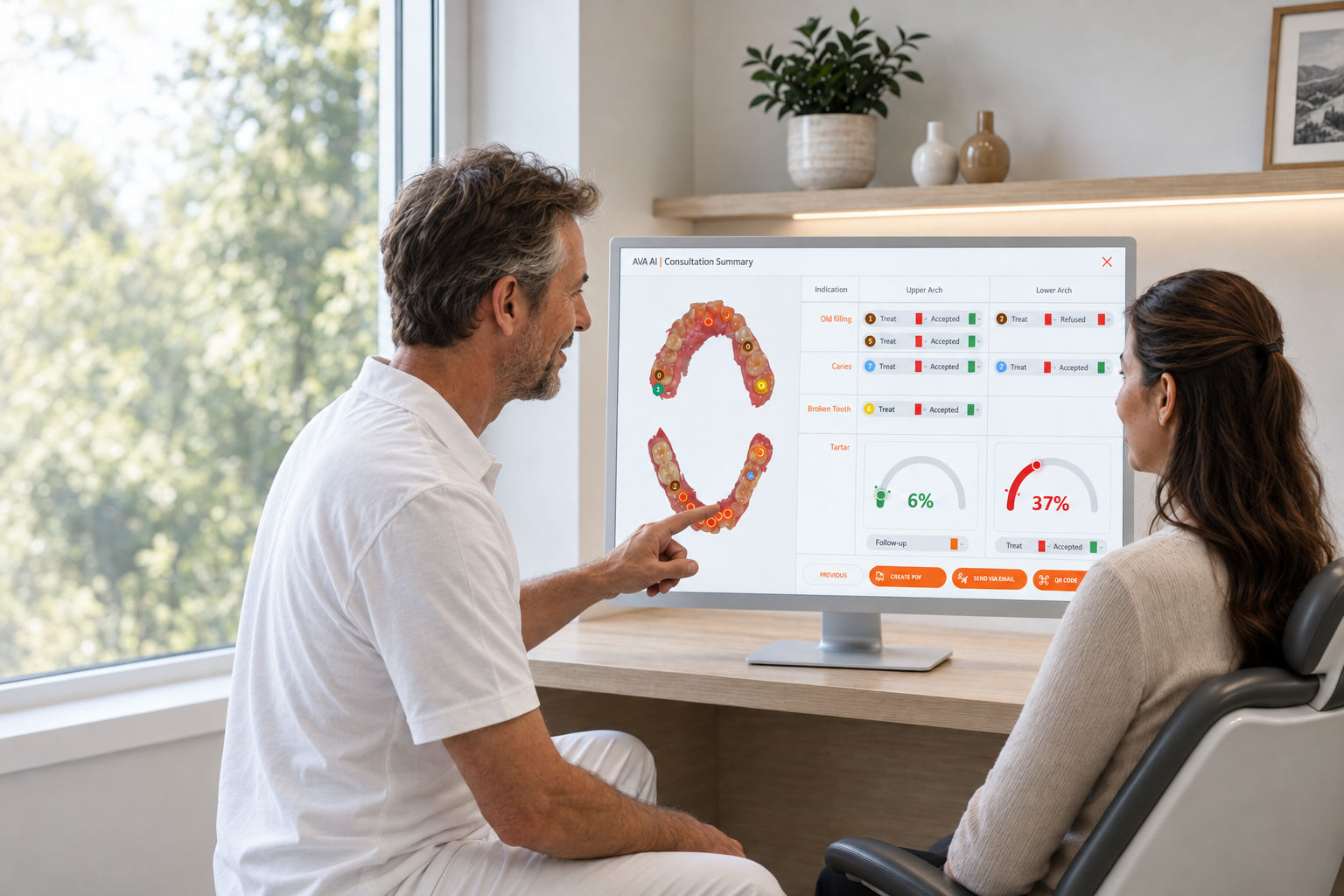
After the patient’s upper and lower arches are scanned, AVA uses AI to surface potential areas for clinician review and places them in anatomical context on a realistic 3D representation of the patient’s own dentition. The dentist then reviews the information, confirms or adjusts the findings, and decides what should be discussed with the patient.
Instead of asking patients to interpret a traditional clinical image, the dental team can show them their own teeth and clearly identify the areas being discussed. The patient is no longer simply being told that something may be wrong. The patient can see where the concern is and better understand the dentist’s explanation.
AI Surfaces. The Dentist Reviews and Decides.
Artificial intelligence is rapidly entering dentistry, and with it comes an important question: how much responsibility should we give AI?
AVA takes a clinician-centered approach. The AI surfaces potential areas for review; it does not make the final diagnosis or prescribe treatment. The dentist reviews and approves the information, may add or adjust findings when appropriate, and retains responsibility for diagnosis, treatment recommendations, and patient care.
That distinction matters. The purpose of AI should not be to replace the dentist’s eyes,
experience, or clinical judgment. Its value is in helping clinicians review information efficiently and communicate it more clearly.
AI assists. The dentist decides.
Is Treatment Acceptance Really a Communication Problem?
When patients postpone or decline treatment, we frequently assume the primary obstacle is financial. Sometimes it is. But there is another possibility that deserves more attention: the patient may simply not understand the problem well enough to act on it.
Consider the difference between telling someone that a tooth requires treatment and allowing that same person to visualize the tooth, see the area of concern, and understand what the dentist is describing.
The diagnosis has not changed. The recommended treatment has not changed. What has changed is the patient’s understanding - and understanding plays an important role in trust and informed decision-making.
3DISC’s current public materials state that average treatment acceptance in general dentistry is approximately 46% and that AVA can help practices elevate acceptance to 70%-75% through AI-powered visualization.* These figures should be understood as 3DISC-reported marketing data, not a guarantee of results for every practice.
The more important point, however, is not simply the percentage. Treatment acceptance should not be about selling more dentistry. It should be about helping patients understand their condition, the care being recommended, and why their dentist believes that care is appropriate.
Better understanding can lead to more confident, informed decisions.
A Practical Hygiene and Pre-Consultation Workflow
For any new technology to become part of everyday practice, the team must be able to use it efficiently without adding unnecessary doctor time. AVA is designed primarily for the hygiene or pre-consultation workflow, allowing trained clinical team members to capture the information before the dentist enters the operatory.
According to 3DISC, both arches can be captured in approximately 90 seconds, with no bite scan required. AVA then surfaces potential findings for the clinician to review. By the time the dentist evaluates the patient, the visual information is organized and ready to support the conversation.
The roles remain clearly defined: the clinical team captures the information; AVA helps organize and visualize potential areas for review; and the dentist provides the clinical judgment, diagnosis, treatment recommendation, and human conversation with the patient.
Rather than replacing the doctor-patient interaction, the technology is designed to make that interaction clearer and more effective.
The Visual Treatment Plan Extends the Conversation
A patient may understand everything while sitting in the operatory and remember considerably less after leaving the practice. Treatment decisions may also involve a spouse or family member who was not present during the appointment.
AVA’s Visual Treatment Plan organizes the approved information into a clear visual summarythat can be shared with the patient at the appropriate time. Automated follow-up allows the patient to revisit the information after the consultation and supports the practice in turning unresolved treatment discussions into scheduled appointments.
Instead of trying to remember everything the dentist explained - or attempting to describe it to someone else from memory - the patient has a visual reference to the conversation. The consultation can therefore continue beyond the dental chair.
A Different Role for the Intraoral Scan
Perhaps the most interesting aspect of AVA is what it suggests about the future of intraoral scanning.
For years, we have thought about the intraoral scanner primarily as a replacement for the traditional impression. We scan so information can travel downstream to a dental laboratory, aligner company, design center, or manufacturing system.
But what if some of that information also traveled in the opposite direction - back toward the patient?
The intraoral scan can become more than a manufacturing record. It can become part of the hygiene visit, the pre-consultation, and the treatment conversation itself.
The first generation of digital dentistry helped us capture information. The next helped us design and manufacture dentistry. Artificial intelligence is now helping us organize and communicate information. Perhaps the next evolution is using all of that technology to help our patients understand it.
Patients cannot make truly informed decisions about treatment they do not understand. Sometimes the most valuable technology is not the technology that allows the dentist to see more. It is the technology that finally allows the patient to see what the dentist sees.