
"Hand-Tight"? The Illusion of Precision in AOX Restorations
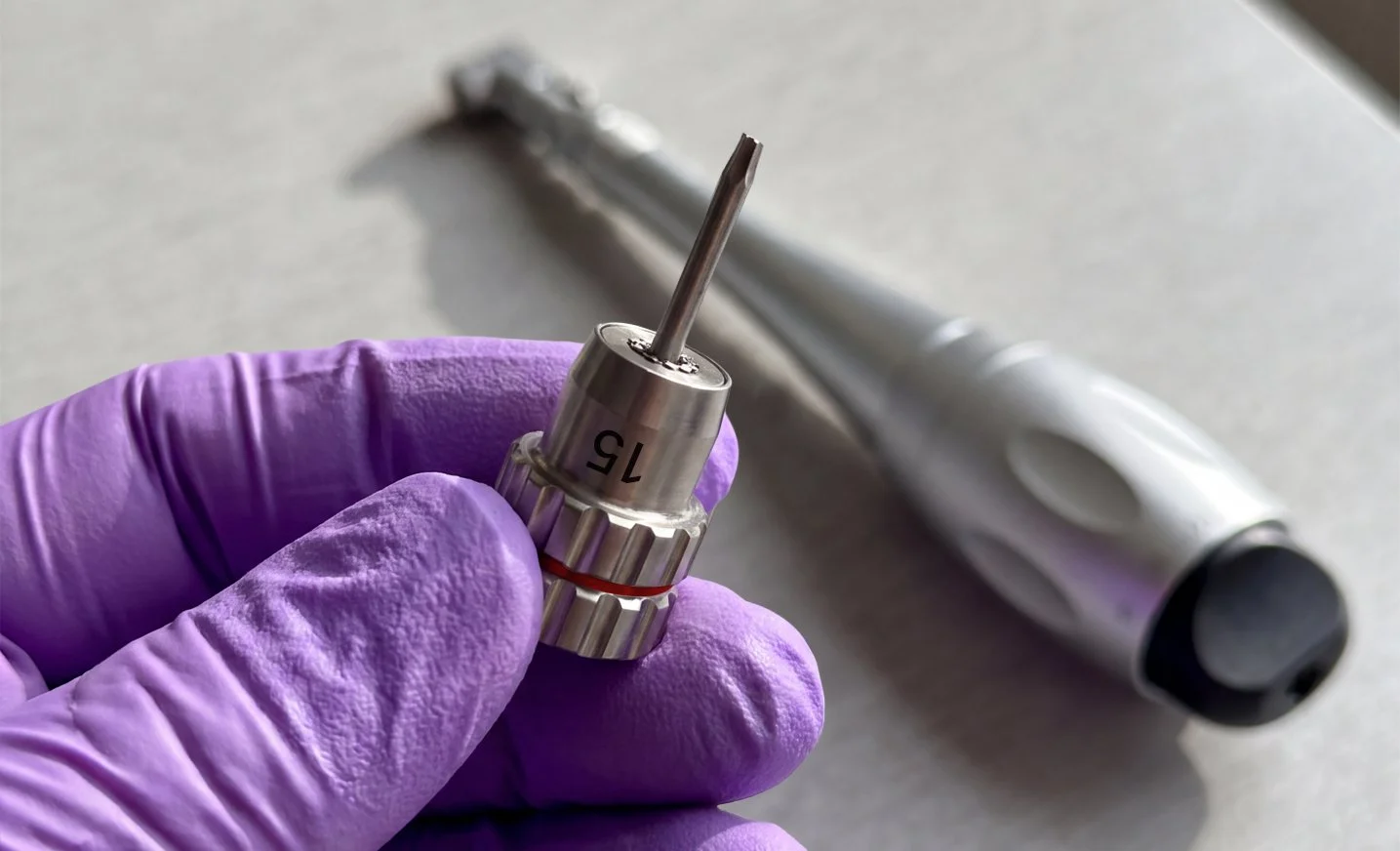
Feel the click. Trust the torque. Tactiq™ is the first ever finger-powered precision torque-control driver built for the most unforgiving moment in implant prosthetics: final torquing. A mechanical declutch allows you to feel the instant you reach the preset torque, without a wrench, so you stop exactly at 10, 15, or 20 Ncm every time. No guesswork, no re-torquing, no doubt.
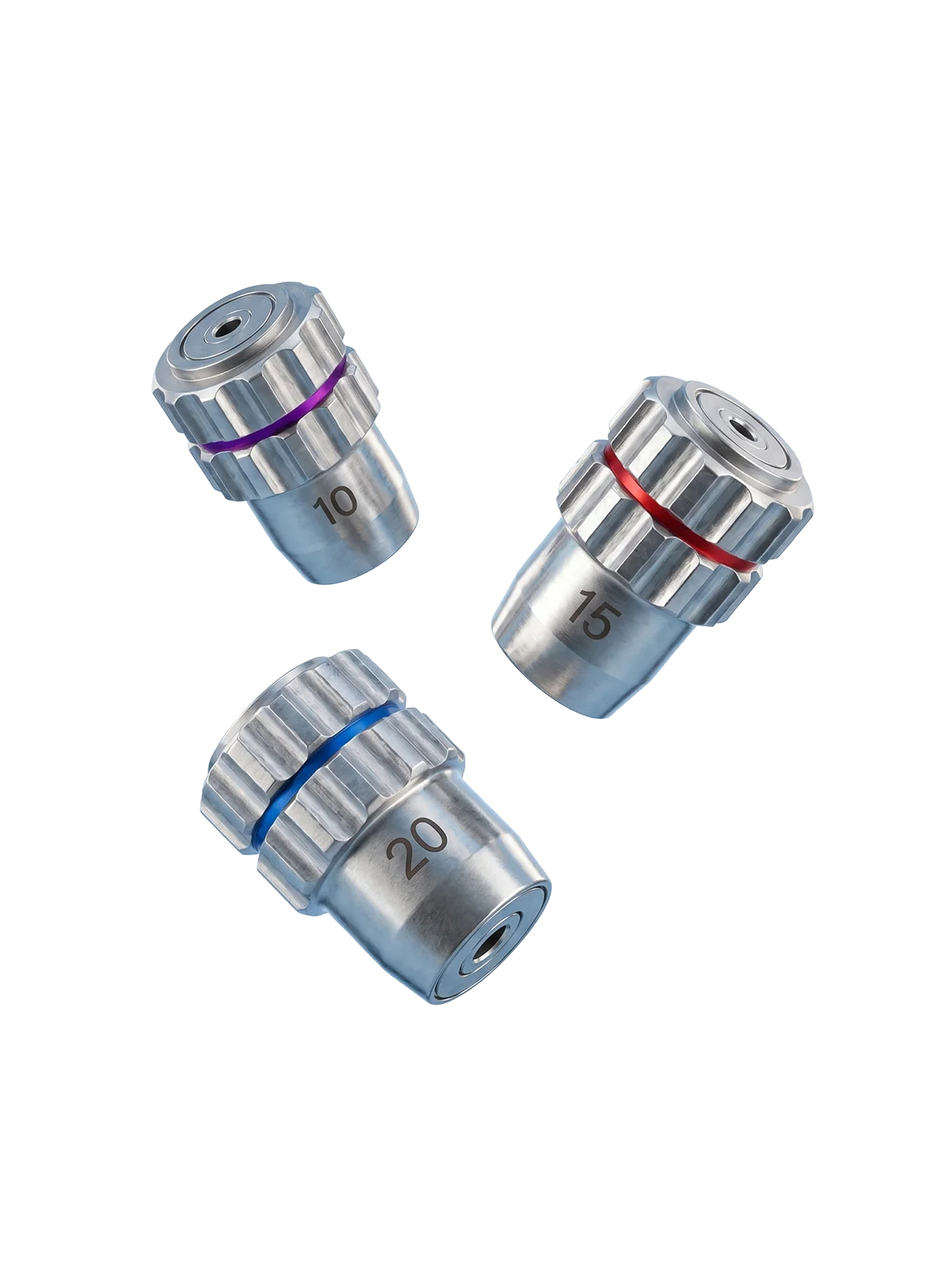
Each driver is color-coded and laser-engraved so the right torque is unmistakable across the tray, even mid-procedure. Machined from medical-grade stainless steel with a deep diamond-knurled grip for confident, slip-free handling in gloved hands, and finished bead-blasted to kill glare under the operatory light. Interchangeable latch-style mandrel tips swap in seconds, and the whole instrument is compatible with every implant system.
For bulk ordering, contact us.
Patent pending | Featured in Business Insider
For twenty years, I've worked chairside with doctors across the country, performing All-on-X conversions using analog, guided, and fully digital workflows. In that time, one pattern has repeated itself more than any other: more than 95% of dentists hand-tighten their prosthetic screws. Not just for temporaries, often for finals, too.
So what does "hand-tight" actually mean? Are our fingers somehow more precise than a calibrated instrument?
No. Obviously not.
If there were a hall of fame for preventable AOX complications, hand-tightening would get its own wing. Funny line. Not-so-funny reality.
Why Do Doctors Hand-Tighten?
It isn't laziness. It's logistics. Ratchets and right-angle torque drivers can be bulky and awkward when you're maneuvering around small prosthetic screws, especially mid-conversion. A finger driver, by contrast, feels natural. It's fast, comfortable, and gives immediate tactile feedback.
But convenience isn't precision. And feel isn't measurement.
The Problem With "Feel"
Finger pressure isn't a unit of measurement. What one clinician calls hand-tight, another might call barely snug, and the same clinician can apply different torque from one screw to the next without realizing it.
That inconsistency isn't cosmetic. Applied torque determines the preload in the screw joint. Too little, and the connection is vulnerable to loosening. Too much, and you're placing unnecessary stress on the screw or the restorative components.
Torque isn't the only variable in a successful AOX restoration — passive fit, occlusion, component compatibility, screw condition, prosthetic design, and clinical technique all matter. But torque is one variable we can control. If it didn't matter, manufacturers wouldn't publish spec sheets for it.
We can't troubleshoot what we don't measure. The goal was never "tighter." It's "correct."
Introducing Tactiq™ by Conmetior
Tactiq is the first finger-driven, torque-limiting knob built specifically for AOX prosthetic restorations. It clicks, then disengages, the moment the preset torque is reached.
It combines the tactile feel, control, and simplicity clinicians already like about hand-driving with the consistency of a preset torque instrument. Same familiar motion as a finger driver, but now it produces a distinct click and automatically releases at the correct torque.
No ratchet. No bulky torque wrench. No over-torquing. No under-torquing. No wondering whether you got it tight enough.
Three Preset Torque Values
Tactiq comes in three color-coded versions: 10 Ncm (purple), 15 Ncm (red), and 20 Ncm (blue). The color-coding lets the clinical team confirm the selected torque at a glance.
Different implant systems, screws, and restorative components call for different torque values, always follow the manufacturer's recommendation for the specific restorative component, and check the Tactiq compatibility chart when selecting a driver.
It's compact, autoclavable, and built for use with latch-type driver tips, so it drops straight into your existing AOX workflow without adding a step.
Why It Matters
Tactiq delivers the tactile control clinicians already prefer, along with preset and measurable torque, protection against over- and under-torquing, and greater consistency from one operator to the next, the foundation of a more standardized restorative protocol.
Most importantly, it gives you confidence that every prosthetic screw was tightened to the value you selected, not to whatever felt right in the moment.
Precision From Beginning to End
We spend enormous time and money controlling every other variable in the AOX workflow: implant position, passive fit, occlusion, photogrammetry accuracy, scan accuracy, restorative design, material selection. Every stage is planned, designed, and manufactured with precision.
And then, all too often, the process ends with a clinician tightening prosthetic screws based on what their fingers believe is correct.
Implant dentistry is built on microns. Why finish on a guess? The final turn of the screw deserves the same precision as everything that came before it. Tactiq brings preset torque control to the same motion clinicians already trust.
The Bottom Line
Tactiq isn't just another dental gadget. It was built to solve one of the most common (and least discussed) sources of inconsistency in AOX restorative workflows.
If you're not measuring torque, you're guessing. And in implant dentistry, guessing isn't a protocol.
Tactiq gives clinicians the tactile feel they want, the torque control they need, and the consistency their restorative protocols demand.
After twenty years of listening to clinicians debate what "hand-tight" really means, I've landed on one conclusion: hand-tight isn't a torque value. It's an opinion.
Not anymore.
Frank-Charles Pope III is an entrepreneur, visionary leader, and master craftsman in dental technology, with over four decades of expertise. Trained in Europe, Japan, and the U.S., he refined his skills under world-renowned ceramic masters before becoming Vice President of one of the largest laboratories in the world, where he helped scale operations dramatically. He is the founder and owner of Allure Dental Studio, FI3LD Dental Solutions, and Conmetior, among other companies, pioneering advancements in full-arch digital workflows, facial scanning, and augmented reality in dentistry. A prolific innovator and sought-after speaker, Frank-Charles continues to push the boundaries of digital dentistry and patient care.