
Why Implant Screws Loosen or Break in AOX
How preload is lost, and what actually reduces risk.
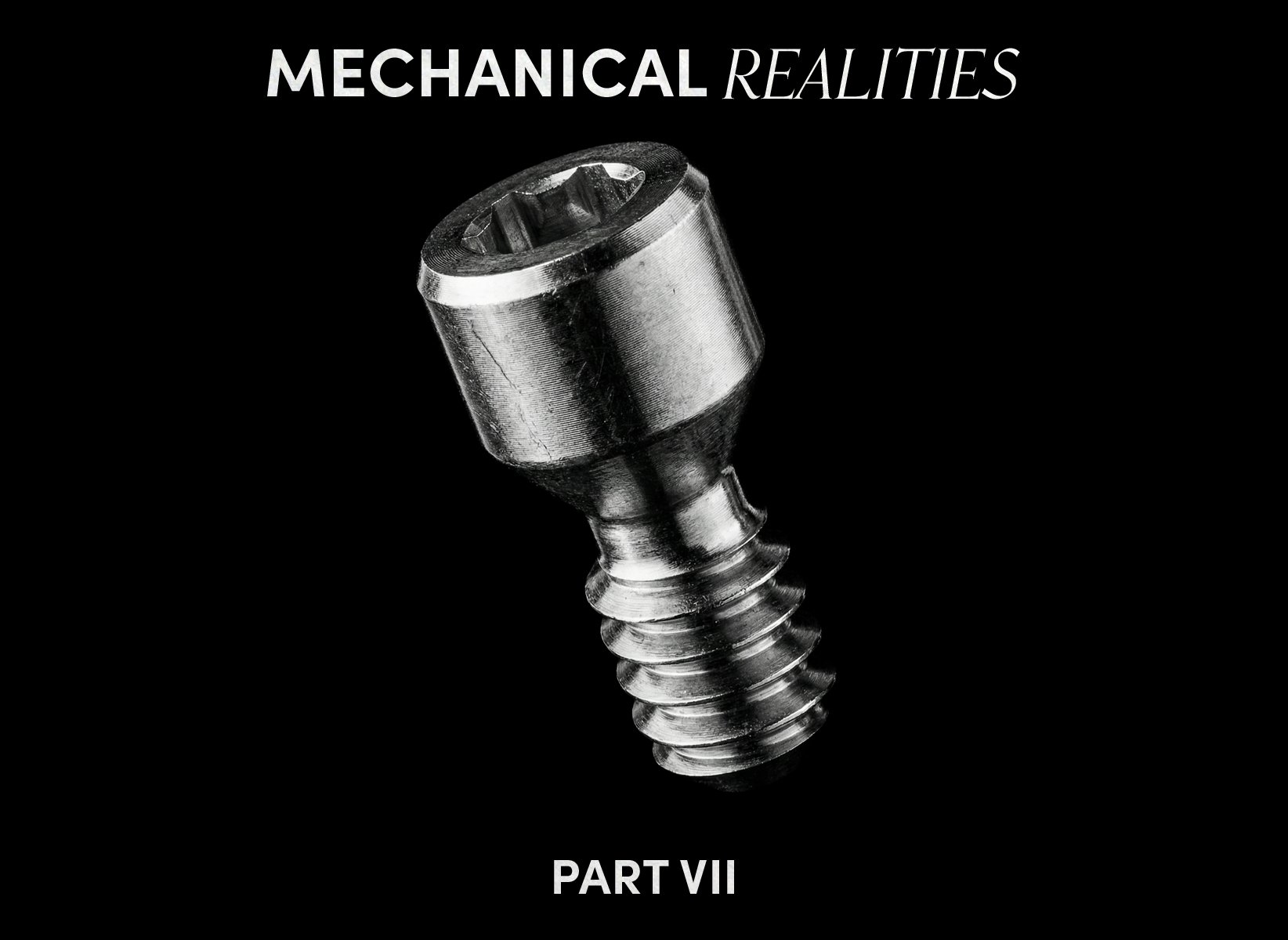
Implant screws in AOX rarely fail because of a single error. They fail when a mechanical system stops doing one thing well: protecting preload over time.
Preload, the elastic stretch created when a screw is tightened, is what holds implant components together. Torque is only the method used to create it. Long-term stability depends on how well that preload survives once the patient begins to function. When preload drops, micromovement begins. When micromovement repeats, fatigue accumulates. Loosening or fracture is the final outcome, not the cause.
A Simple Way to Visualize Preload Loss
Think of preload as a compressed spring holding two components together.
Tightening stretches the screw → preload is created
Early settling flattens contact surfaces → preload drops
Repeated chewing loads cycle the joint → preload decays
Below a critical threshold, the screw absorbs movement instead of clamping
From that point on, every bite becomes a fatigue cycle.
Why This Is Amplified in AOX
AOX systems place exceptional demands on screws:
Higher functional loads from full-arch restorations
Longer lever arms, especially posteriorly
Uneven load sharing, even in well-planned cases
Strong dependence on passive fit and rigid frameworks
Smaller margins for preload loss before micromovement begins
In AOX, screws often fail not because they were tightened incorrectly, but because the system allowed preload to erode under function.
The Main Mechanical Contributors
Micromovement under function
Any movement at the prosthetic interface concentrates stress at the screw.
Early settling after tightening
Microscopic flattening of threads and interfaces reduces preload soon after delivery.
Friction variability
Only a fraction of applied torque becomes preload. Minor differences in surface condition, moisture, or screw history can significantly change outcomes.
Cyclic fatigue
Most AOX screw fractures are fatigue failures, caused by repeated loading well below maximum strength, not by a single excessive event.
Where Patient Chewing Habits Come In
Patient behavior influences how preload is challenged over time.
High chewing frequency increases fatigue cycles
Chewing asymmetry concentrates load on specific implants
Grinding and lateral movement introduce shear forces that accelerate preload loss
These patterns explain why failures often recur in the same location.
Do Night Guards Help in AOX?
Sometimes, but not always. Night guards do not protect screws directly. They help only when they reduce damaging load patterns.
More helpful when:
The patient grinds or clenches laterally
There is a history of repeated screw loosening or fracture
Less helpful when:
The patient has normal bilateral chewing
The root issue is non-passive fit or uneven load distribution
Night guards are a risk-management tool, not a mechanical fix.
So What Is the Solution?
There is no single solution, only risk reduction through system control. Screw stability improves when AOX systems:
Preserve preload (clean interfaces, correct torque, appropriate retightening strategy)
Eliminate micromovement (passive fit, rigid frameworks, accurate load distribution)
Control functional forces (occlusion design, cantilever management)
Manage high-risk habits (night guards for grinders, not universally)
No tool, number, or accessory can compensate for a system that allows preload to decay.
The Takeaway
Implant screws in AOX loosen or break when preload is lost faster than the system, and the patient’s loading pattern, can tolerate. Reliable outcomes come not from chasing torque, but from building systems that protect preload over time.
That’s not opinion. That’s mechanical reality.