
A New Horizon in Peri-implantitis Management: A Clinical Perspective on Focused PEMF Therapy
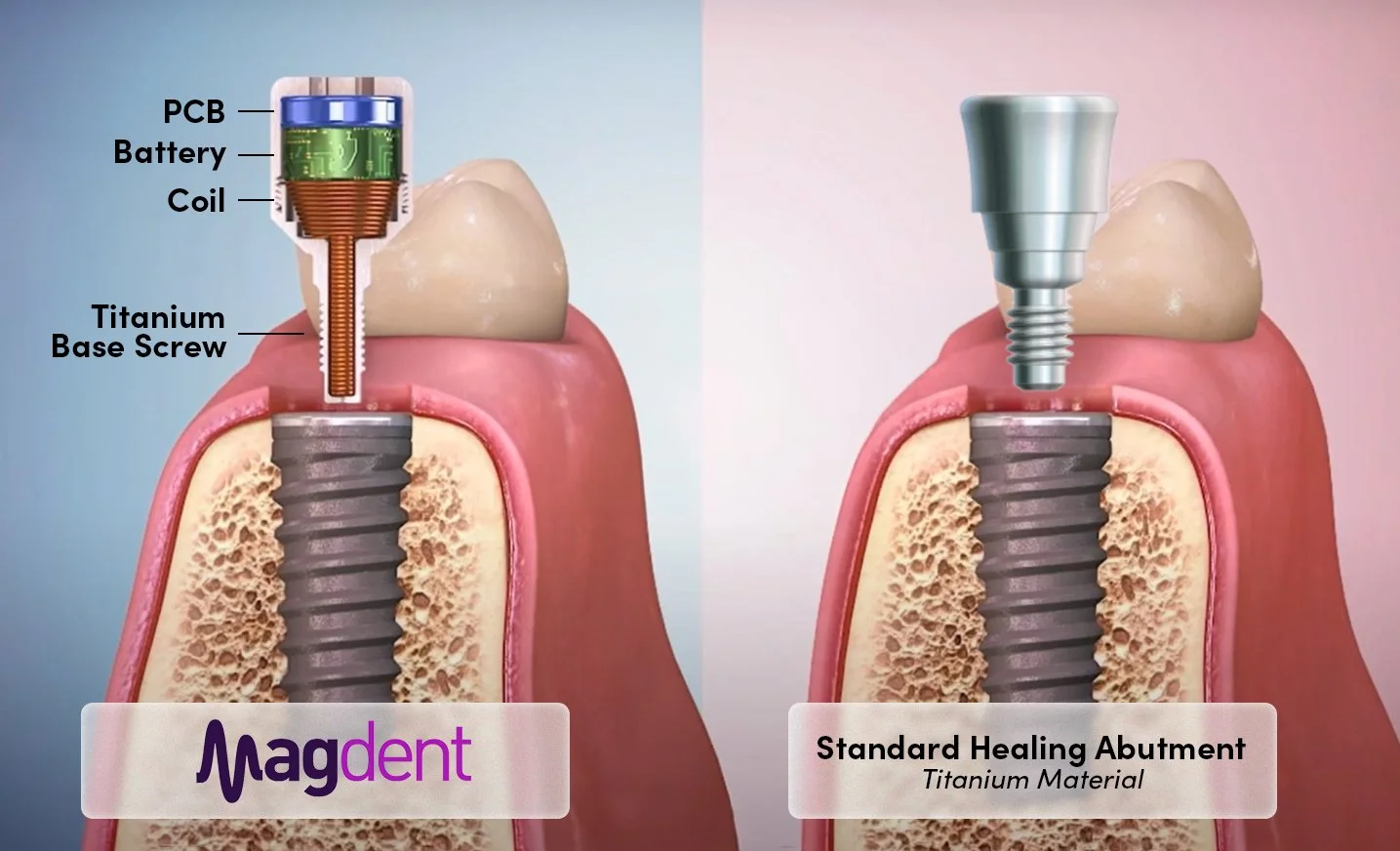
Few conditions trouble the long-term implant clinician more than peri-implantitis. Characterized by inflammation of the peri-implant mucosa and progressive loss of supporting bone, it represents the single most common biological complication threatening implants that were otherwise successfully integrated. Traditional nonsurgical management has centered on mechanical debridement, and while this remains the foundation of care, the long-term data have been sobering — particularly in resolving deep pockets and preventing recurrence. Against this clinical gap, Pulsed Electromagnetic Field (PEMF) therapy has emerged as a meaningful adjunctive modality, and the Magdent Miniaturized Electromagnetic Device (MED) brings it to the chairside in a form designed for routine use. The MED is CE marked and currently available for sale in Europe.
The Clinical Need for a Better Adjunct
Mechanical debridement, with or without local antimicrobials, addresses the immediate bacterial load but does little to modify the underlying inflammatory environment or stimulate bone regeneration. Recurrence is common, deep pockets are difficult to resolve, and clinicians are often forced to escalate toward surgical intervention. What the field has lacked is a tool that works biologically rather than purely mechanically — one that modulates inflammation, supports bone, and disrupts pathogenic biofilms simultaneously.
Clinical Outcomes from a Multicenter Trial
A multicenter randomized clinical trial with a mean follow-up of 20 months compared mechanical debridement alone against debridement combined with 30 days of continuous PEMF stimulation via the MED. The results were clinically meaningful:
1. Higher success rates – Clinical success (PD < 5 mm, absence of bleeding or suppuration, no further bone loss) reached 68% in the PEMF group, compared to 54.54% in controls.
2. Reduced probing depths – Mean PD at the deepest sites in the PEMF group fell from 7.1 mm to 4.6 mm, while controls remained at 5.4 mm.
3. Vertical bone gain – PEMF-treated sites showed a 0.2 mm vertical bone gain, while controls continued to lose bone at -0.3 mm.
4. Inflammation control – Bleeding on Probing dropped from 100% at baseline to 17.1% at final follow-up in the PEMF group.
These are not marginal improvements. They reflect a measurable shift from disease stabilization to genuine tissue recovery.
The Biology Behind the Numbers
Three mechanisms appear to drive PEMF's clinical effect in peri-implantitis:
Cytokine regulation – PEMF exposure significantly reduces pro-inflammatory markers such as IL-1β and TNF-α in the peri-implant crevicular fluid, attenuating the inflammatory cascade that drives soft-tissue and bone destruction.
Attenuation of bone loss – PEMF modulates macrophage-derived exosomes, which in turn suppress osteoclastogenesis. This directly counteracts the resorptive activity central to peri-implantitis progression.
Active tissue repair – Preclinical data confirm that PEMF enhances the proliferation and adhesion of Mesenchymal Stem Cells, favoring bone formation even under adverse inflammatory conditions.
A Bio-Modifier of the Peri-implant Microbiome
PEMF's microbiological effect is equally relevant. High-throughput 16S RNA sequencing from human subjects evidenced a fivefold or greater reduction in 23 bacterial species in the PEMF group. Critically, putative pathogens associated with tissue damage — including Porphyromonas gingivalis and Tannerella forsythia — were significantly reduced or entirely absent in treated sites. By reshaping bacterial co-occurrence networks, PEMF produces a more robust, health-associated microbial profile that is structurally resistant to pathogen invasion.
Practical Implications
For the restorative clinician, this matters because peri-implantitis management has traditionally demanded escalating intervention with diminishing returns. Magdent is the first company to bring FDA-approved bone healing technology into the oral cavity, miniaturizing PEMF into a healing abutment that requires no additional surgical step, no capital equipment, and no patient compliance burden. The therapy runs continuously and locally for 30 days, exactly where it is needed.
Conclusion
Peri-implantitis has long resisted the tools available to treat it. The cumulative clinical and biological evidence suggests that focused PEMF therapy offers something genuinely new — a nonsurgical, biologically active adjunct capable of resolving infection, modulating inflammation, and stabilizing both hard and soft tissues. As the first device to deliver FDA-validated bone healing technology directly to the implant site, the Magdent MED is CE marked and available for European practitioners today, giving clinicians a predictable adjunct for one of the most challenging conditions in modern implant dentistry. Magdent is actively seeking strategic partnerships and investors to join this revolution in implant care.