
The Role of Facial Scanners in Modern Dentistry
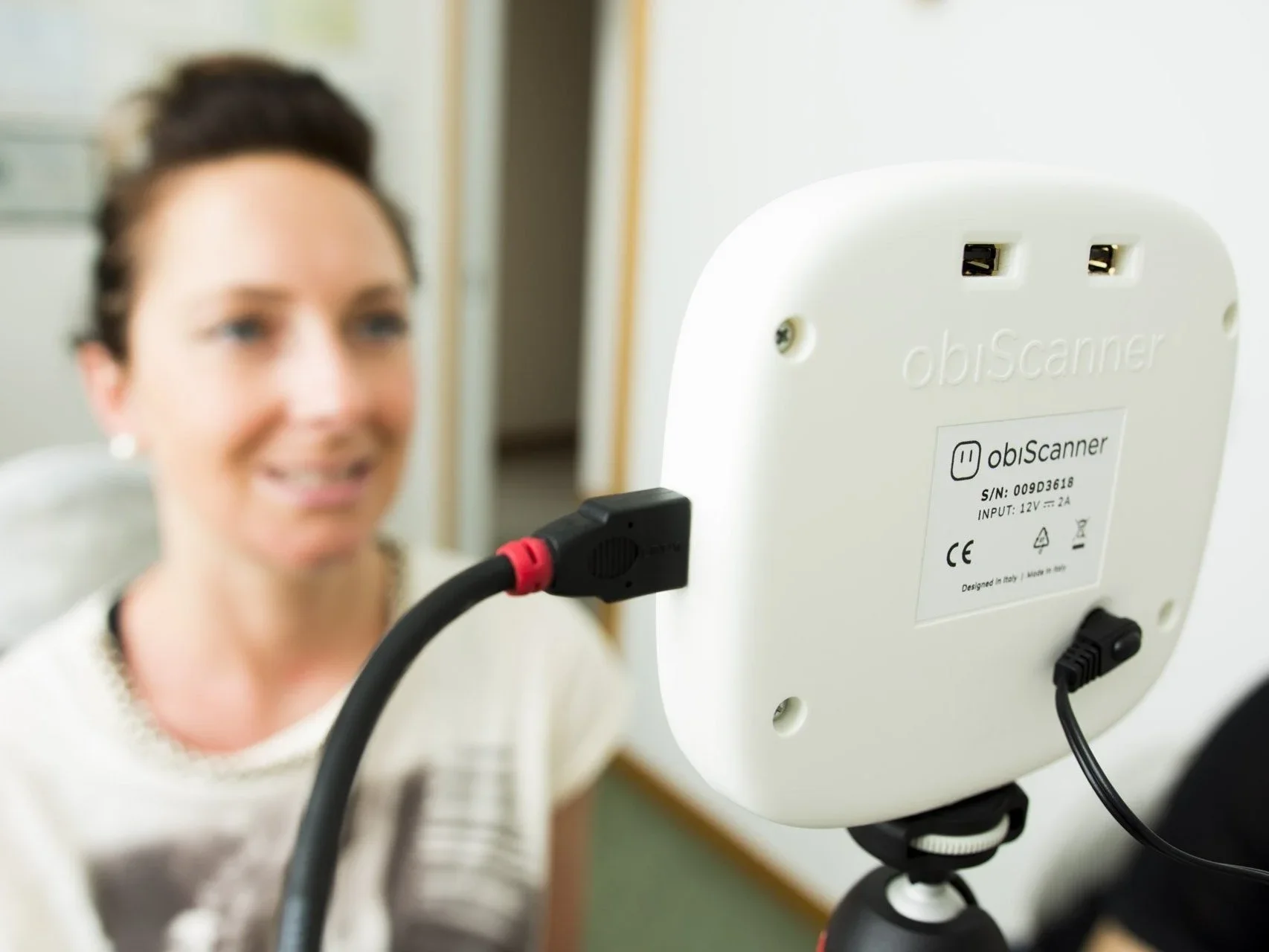
Digital dentistry has evolved dramatically in recent years, and one of the most impactful innovations is the integration of facial scanners. These devices are transforming how dental professionals approach treatment planning, smile design, communication, and prosthetic fabrication, offering new levels of precision, realism, and efficiency.
What Are Facial Scanners?
Facial scanners capture three-dimensional (3D) images of a patient’s face. Unlike traditional photography, they generate highly detailed digital models, recording every contour and expression with remarkable accuracy. This allows clinicians and technicians to design restorations that are not only functional but also harmoniously integrated with the patient’s facial structure.
Applications in Dentistry
1. Smile Design and Aesthetic Planning
Facial scanners play a key role in digital smile design. When integrated with intraoral scans, they help visualize and align restorations precisely with the patient’s facial landmarks. The result: smiles that look natural, balanced, and esthetically consistent. Patients can also preview their new smile digitally, which enhances communication and confidence before treatment begins.
2. Implantology and AOX Workflows
In All-On-X (AOX) and implant cases, precision is essential. Facial scans ensure accurate midline alignment, occlusal harmony, and soft-tissue balance. By combining facial and intraoral data, clinicians can plan and execute full-arch restorations with greater predictability and efficiency.
3. Orthodontics
Orthodontists use facial scanning to assess facial symmetry, growth, and proportionality throughout treatment. 3D visualization improves diagnostics and supports treatment plans that enhance both function and esthetics.
4. Dentures and Removable Prosthetics
For complete dentures, facial scanners help ensure that final prosthetics complement each patient’s proportions and expressions—often reducing fabrication to as few as two appointments.
Current State of Facial Scanners in Dentistry
Adoption of facial scanning technology is accelerating. High-end labs and digitally advanced practices are incorporating it as a standard component of their workflow. Manufacturers continue to refine scanners for greater speed, accuracy, and affordability.
A major trend is the rise of accessible, cost-effective solutions such as the ObiScanner and compact APS-type systems, which deliver advanced capabilities at far lower cost than traditional equipment.
Advantages of Facial Scanners
Accuracy: Provides precise 3D data for enhanced treatment planning.
Patient Engagement: Allows patients to visualize expected outcomes.
Integration: Seamlessly connects with CAD/CAM, IOS, and CBCT systems.
Efficiency: Reduces remakes, saves chair time, and streamlines lab coordination.
Future Trends
The next wave of facial scanners will feature AI-driven automation, real-time simulation, and augmented-reality integration. As these technologies become more user-friendly and affordable, facial scanning will become a core standard in both large and small dental practices.
Top Facial Scanners in Dentistry (2025)
ObiScanner (FI3LD Dental Solution)
Key features & use cases
Desktop facial scanner built for dental workflows.
Uses Class-1 laser technology (eye-safe, non-flashing).
Fast scan time (~6 seconds).
Compatible with CAD/CAM, IOS, and CBCT systems (.stl, .obj, .ply).
Captures static and expressive scans with minimal patient movement.
Strengths
Comfortable, non-flashing laser capture.
Fast and efficient for clinical use.
Broad digital integration.
Excellent value (~$2,500 USD through Conmetior).
Considerations / limitations
Slightly less detail in deep undercuts or hairline areas.
Requires stable mounting and calibration.
Fixed desktop configuration.
Thunk Scanner (InstaRisa Workflow)
Key features & use cases
High-end structured-light handheld scanner used in InstaRisa’s AOX and denture protocols.
Captures full-color 3D facial data for alignment with IOS and CBCT scans.
Strengths
Seamless integration with InstaRisa workflows.
High-resolution (~0.04 mm accuracy).
Portable, suitable for chairside use.
Considerations / limitations
Bright, repetitive LED flashes can cause discomfort or light sensitivity in some patients.
Operator-dependent; motion artifacts possible.
Proprietary software environment.
High cost (~$19,000 USD, or ~$16,000 without laptop).
Artec Eva — (~$10,000)
Key features & use cases
Industrial-grade structured-light 3D scanner used across dental, medical, and design sectors.
Strengths
Outstanding resolution and surface texture quality.
Versatile applications beyond dentistry.
Considerations / limitations
Requires a high-performance computer.
Not dental-specific; additional post-processing needed.
Bright structured light may reduce patient comfort.
Zirkonzahn Face Hunter — (price on request)
Key features & use cases
Dental-dedicated scanner for precision esthetic and prosthetic design.
Strengths
Exceptional accuracy and reproducibility.
Deep integration with Zirkonzahn’ s CAD ecosystem.
Considerations / limitations
High cost and complexity.
Non-portable; designed for lab environments.
Dental Wings 3Di — (price on request)
Key features & use cases
Dedicated full-face scanner for dental and implant workflows.
Strengths
Accurate full-face capture.
Direct integration with Dental Wings software.
Considerations / limitations
Costly setup and calibration.
Limited independent validation data.
More complex interface for new users.
iTero (App / System)
Key features & use cases
Primarily an intraoral scanner; offers 2D smile simulations rather than 3D facial capture.
Strengths
Exceptional intraoral accuracy.
Excellent integration with Invisalign and Align Technology systems.
Considerations / limitations
Not a true facial scanner.
Requires additional hardware for facial data capture.
RAYFace — (~$20,000)
Key features & use cases
One-shot, six-camera dental facial scanner with automatic registration (face + IOS + CT).
Strengths
Extremely fast (0.5-second) capture.
Sophisticated software for alignment and visualization.
Considerations / limitations
High price.
Fixed desktop format.
Requires calibration and may still need manual corrections.
MetiSmile (SHINING 3D) — (~$6,000)
Key features & use cases
Dental-specific scanner integrated with Aoralscan IOS; captures full-face geometry (~10 seconds).
Strengths
Eye-safe infrared light (no flashes).
Portable dual-mode (handheld/desktop).
Affordable and fast.
Considerations / limitations
Regular calibration required.
Manual movement for full coverage.
Slightly reduced accuracy in deep contours.
Vectra H2 (Canfield Scientific) — (~$5,000 – $10,000)
Key features & use cases
Portable 3D imaging system used in esthetic and restorative dentistry.
Strengths
Excellent texture detail and simulation quality.
Lightweight and intuitive.
Considerations / limitations
Flash-based capture may cause eye fatigue with repeated scans.
Accuracy optimized for visualization rather than surgical precision.
Summary
Facial scanners are redefining how clinicians plan, communicate, and deliver restorative dentistry. From high-end systems to affordable options, they empower dental professionals to merge precision, efficiency, and artistry in every case. For practices and labs striving for modern excellence, facial scanning is now an essential part of the digital workflow.