
Why Screws Feel Different at the Same Torque
What your hand senses that the number can’t explain.
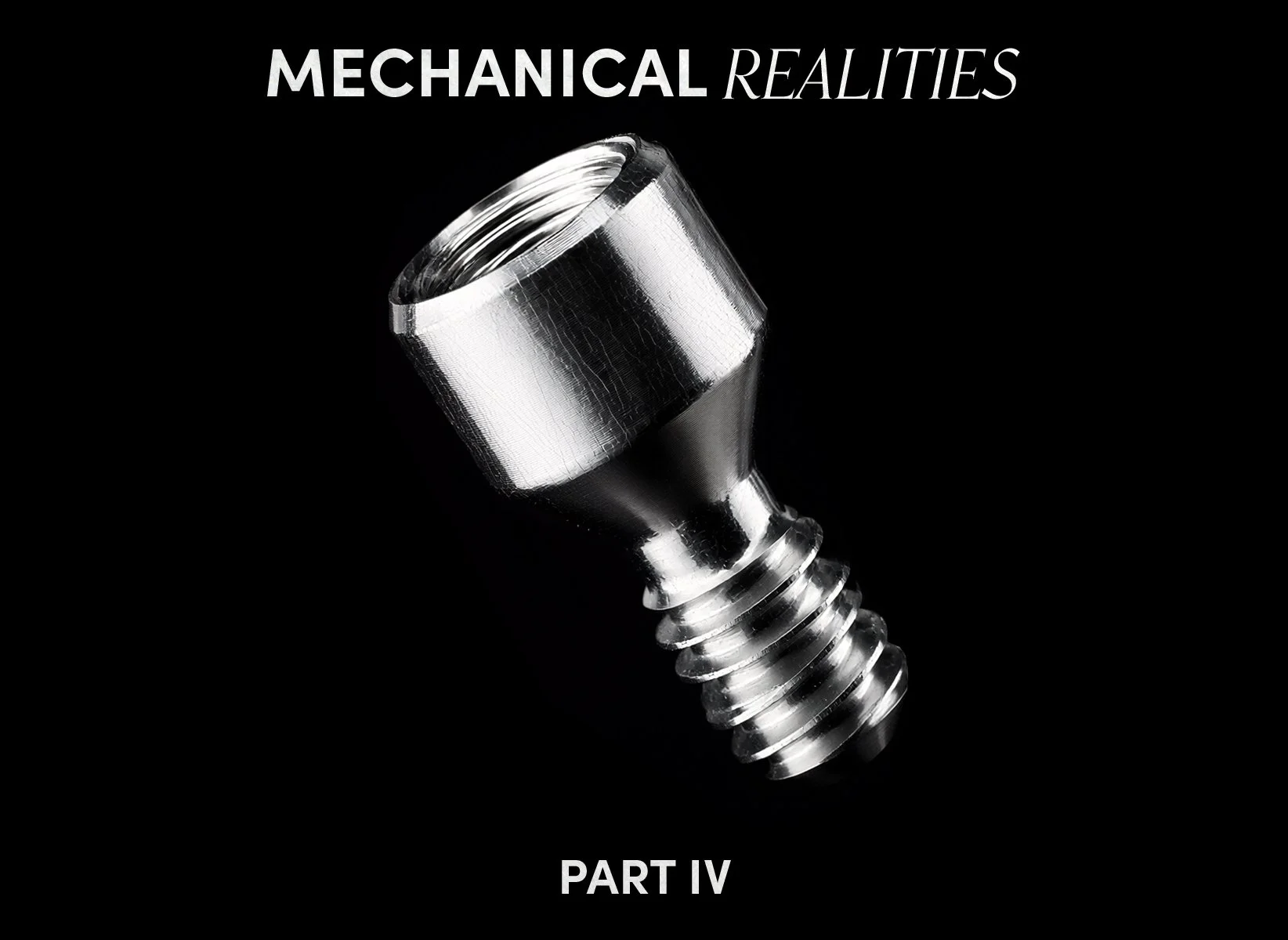
Clinicians often notice it immediately: two screws, same system. Same torque value. And yet, they feel different. This difference is not subjective, its mechanical.
Screw Length Changes Elastic Behavior
When a screw is tightened, it stretches slightly. That stretch is elastic, it behaves like a spring. Longer screws stretch more under the same load. Shorter screws stretch less.
As a result:
Longer screws tend to feel smoother and more progressive
Shorter screws tend to feel stiffer and more abrupt
The torque value may be identical, but the mechanical response is not.
What the hand feels is not torque, its elastic resistance.
Material Matters: Titanium vs. Steel
Different materials respond differently under load. Titanium, commonly used in dental screws, has:
A lower elastic modulus than steel
Greater elastic stretch for the same applied force
This is why titanium screws often feel more forgiving during tightening. They elongate slightly more before reaching the same preload. Steel screws, by contrast, feel stiffer and reach resistance sooner. Neither behavior is better or worse. They’re simply different mechanical realities.
Why “Feel” Changes Without Anything Being Wrong
Changes in tactile feedback do not necessarily indicate a problem. They may reflect:
Screw length differences
Material properties
Interface conditioning from previous tightening
Minor variations in friction
The system is behaving as designed, but the challenge is that torque values do not describe these differences—only limits.
Why This Matters Clinically
Understanding why screws feel different helps avoid misinterpretation. A smoother feel does not mean under-tightening. A stiffer feel does not mean over-tightening. It means the screw is responding according to its geometry and material. This awareness reduces the temptation to compensate unnecessarily, by adding force when none is required.
The Takeaway
The hand does not feel numbers, it feels resistance. That resistance is shaped by:
Screw length
Material stiffness
Elastic stretch
Torque values define boundaries. Feel provides context. Understanding both leads to more consistent outcomes.