
Introducing: Mechanical Realities Zirconia
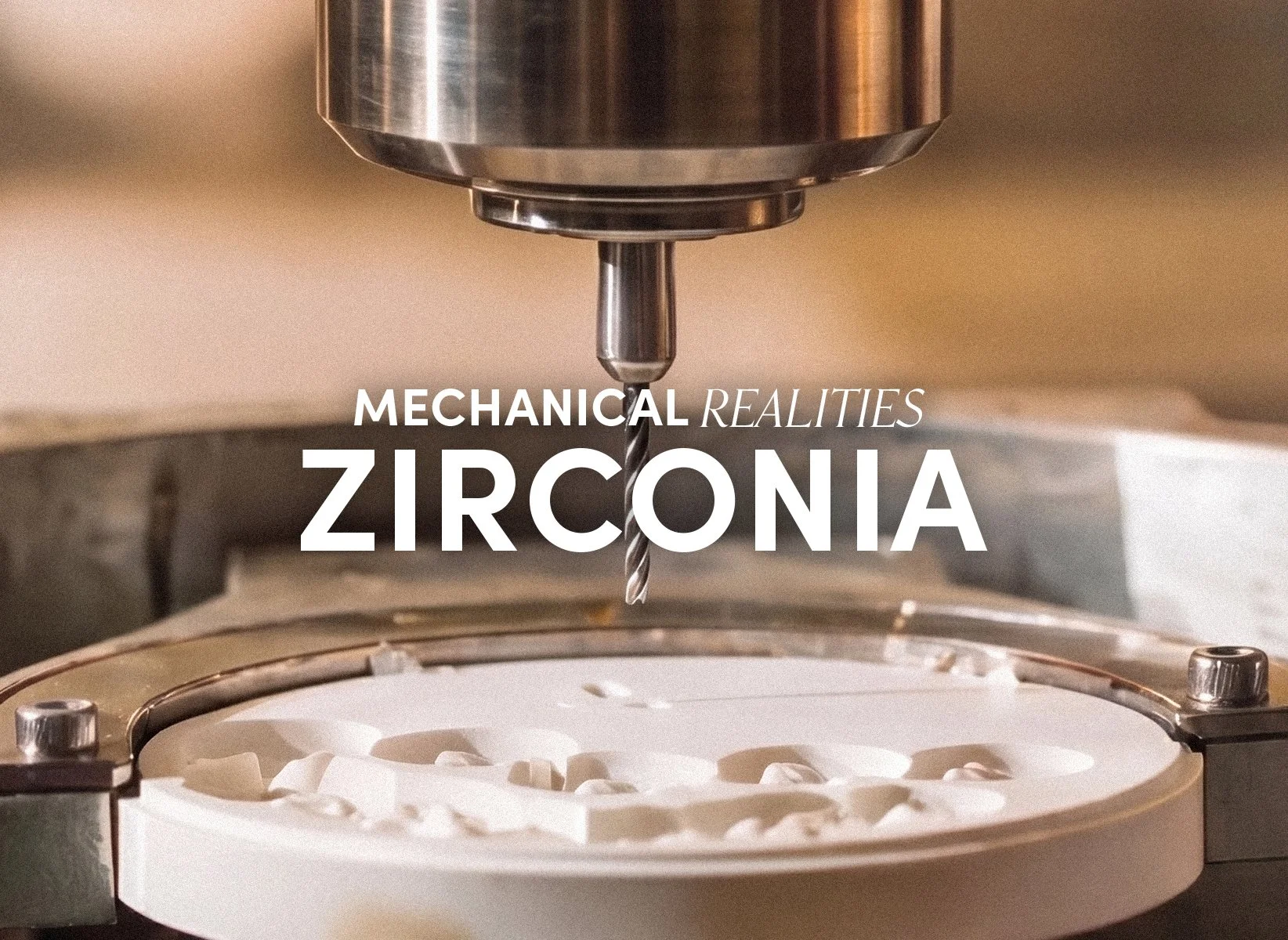
An engineering view of full-arch restorations without the marketing. Zirconia restorations are no longer new to dentistry. They are widely used, heavily discussed, and frequently debated, especially in full-arch implant cases. Much of that discussion however, focuses on outcomes rather than mechanisms or preferences, rather than physics. This series was written to step outside that cycle.
From an engineering perspective, materials do not behave unpredictably. They respond to stress, geometry, interfaces, surface condition, and time. When failures occur, they are rarely mysterious. They are the result of conditions that were present long before the outcome became visible.
Zirconia is no exception.
It is neither a miracle material nor an inherent liability. It is a structural ceramic with well-understood properties that behave exactly as predicted by mechanics. When zirconia restorations succeed, they do so because the system was designed within those limits. When they fail, the reasons are mechanical, not emotional. The purpose of this series is not to argue for or against zirconia itself. Instead, the focus is on how zirconia behaves in real prosthetic systems, particularly full-arch implant restorations, when subjected to load, fatigue, interfaces, surface modification, and time. Each article isolates a single domain of behavior and examines it through the lens of engineering rather than technique, brand, or preference.
These articles intentionally avoid:
Product comparisons
Brand endorsements
Simplified conclusions
Reassurance or alarm
They also avoid asking whether zirconia is “too hard,” “too heavy,” or “dangerous” as standalone questions. These framings obscure the real variables that determine success or failure. Instead, this series examines:
How stress accumulates and where it concentrates
How fatigue and surface damage reduce structural lifespan
How volume and geometry influence load transmission
How interfaces relocate rather than eliminate risk
How surface condition governs wear mechanisms
Each article stands on its own, and together they form a mechanical map of how zirconia functions in dentistry when stripped of marketing language and clinical folklore. This is not a how-to guide or a set of clinical recommendations. It is an attempt to describe reality as it is, not as we might prefer it to be. Zirconia does not need defending. It needs understanding.