
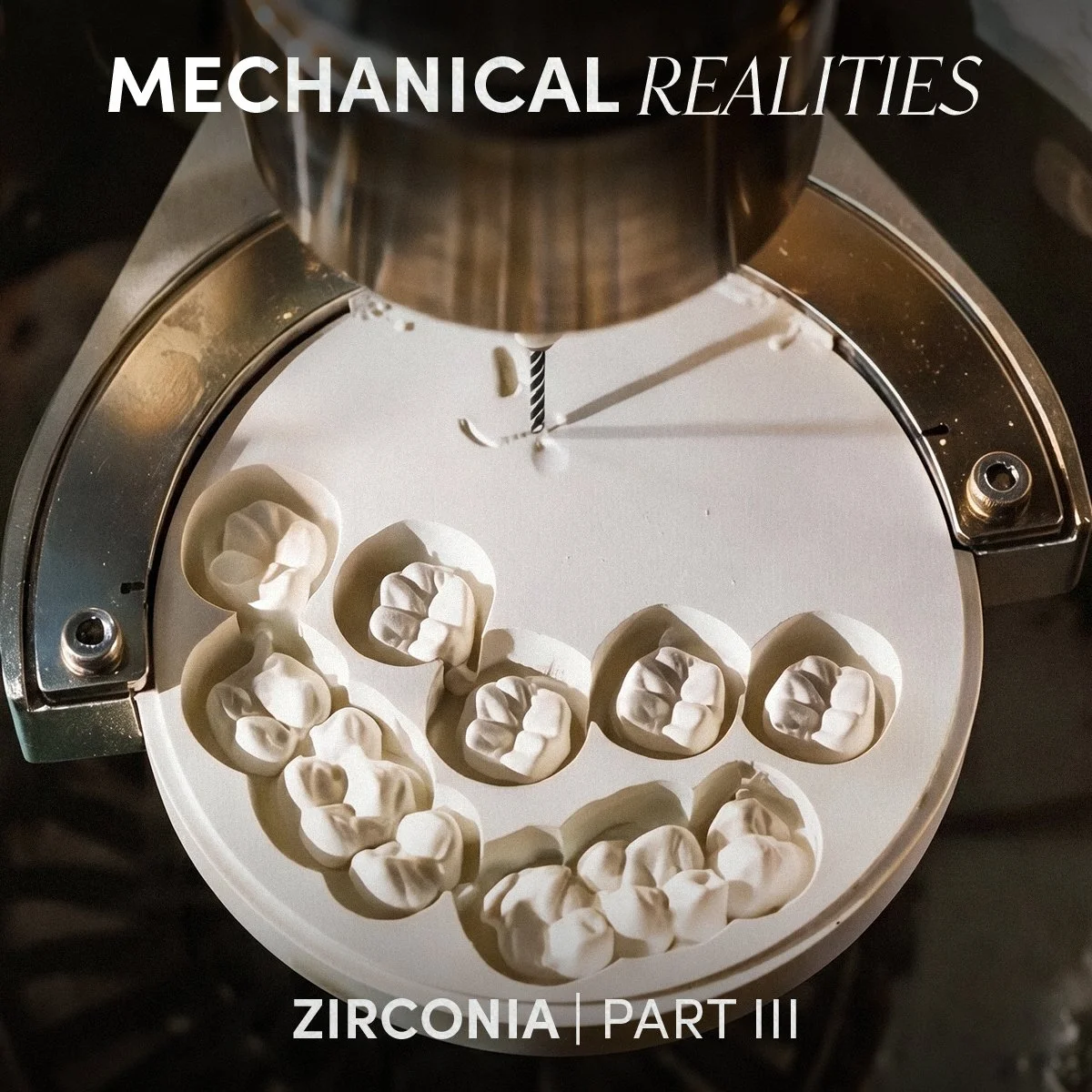
Weight Is Rarely the Limiting Variable
Full-arch zirconia restorations are often criticized for being “too heavy,” but weight is only part of the story. While zirconia is denser than acrylic-based alternatives, the mass of a restoration is determined just as much by its design as by the material itself.
In this article, we examine the relationship between density, volume, and prosthetic space, why excessive bulk often signals deeper design compromises, and how contouring, support distribution, and force management influence performance far more than weight alone.
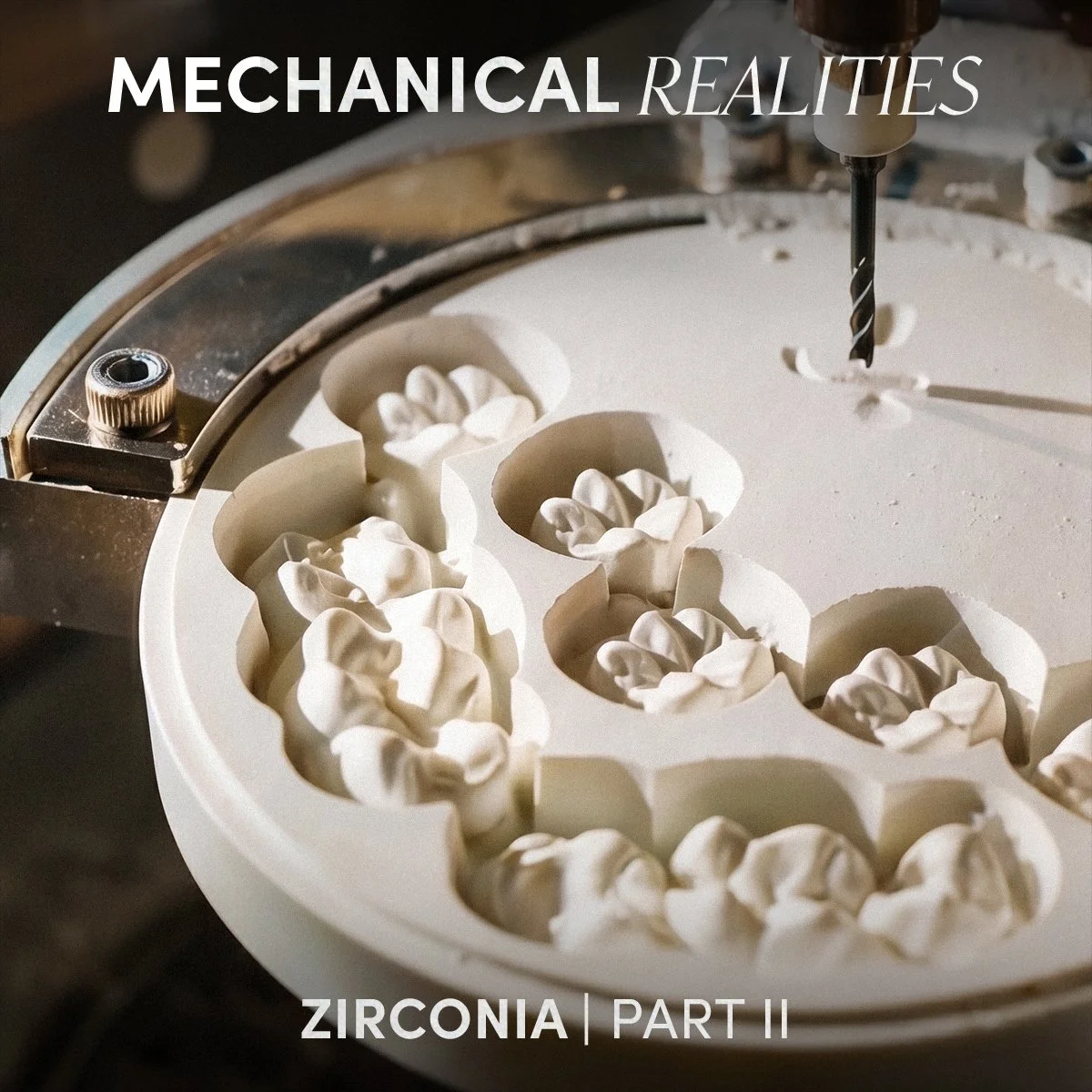
Zirconia Rarely “Just Breaks”
Zirconia fractures are often described clinically as sudden events.
Mechanically, they are the final step of a long process. Ceramics fail through flaw-driven crack propagation. Microscopic defects introduced during manufacturing, adjustment, or surface modification act as stress concentrators. Under repeated loading, these flaws grow incrementally until the remaining cross-section can no longer sustain the applied force.
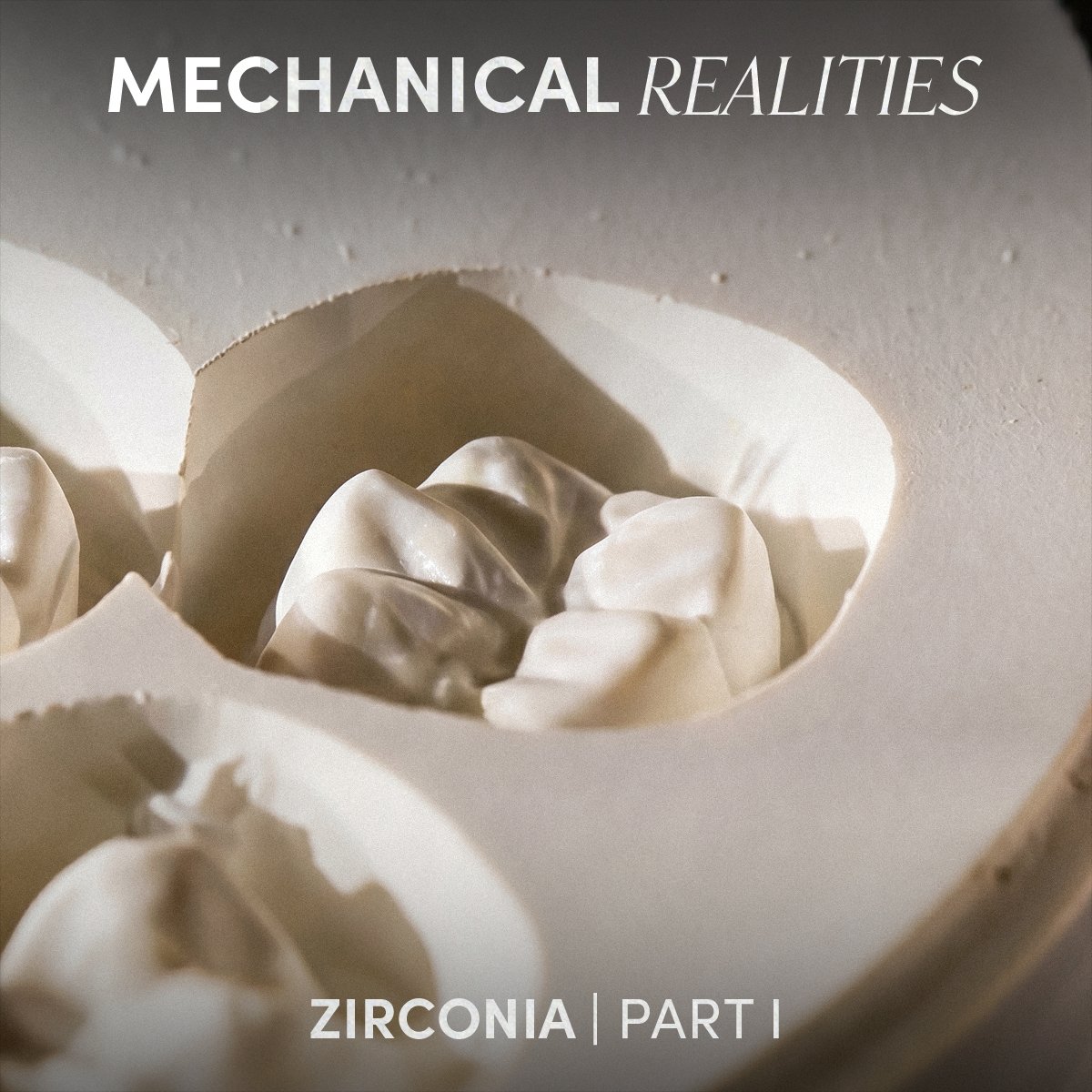
Hardness Isn’t the Problem
Zirconia is frequently described as “too hard” for dentistry.
From an engineering perspective, that statement misunderstands how structural ceramics actually fail. Hardness measures resistance to surface indentation. It does not describe fracture behavior. Zirconia fractures when tensile stress exceeds the material’s tolerance at a defect. Where that stress exists, and how it is distributed, matters far more than how hard the material is.
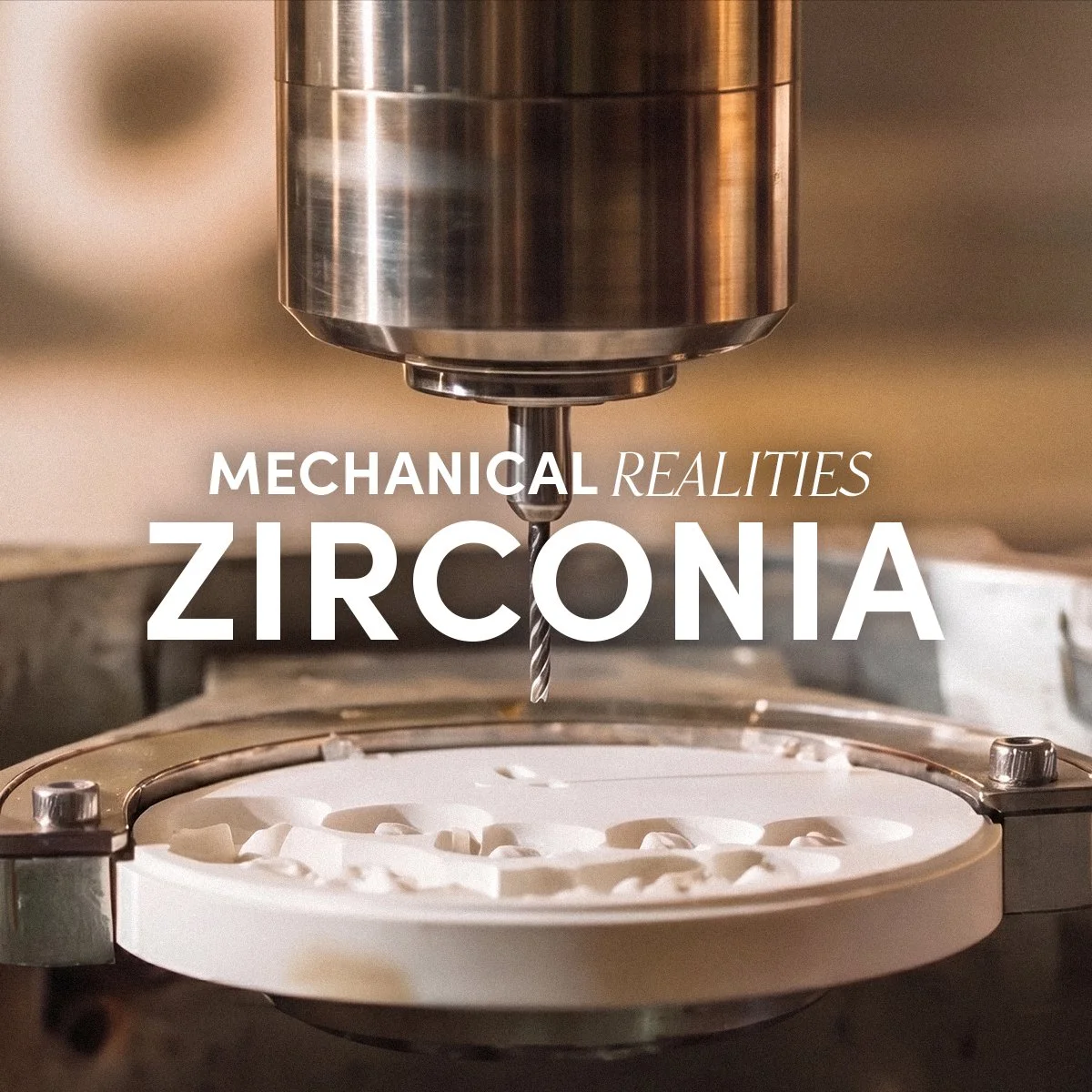
Introducing: Mechanical Realities Zirconia
Zirconia is widely used. Widely discussed. And often misunderstood. Most of the conversation focuses on outcomes—what worked, what didn’t, what people prefer. Much less attention is given to the mechanics behind those outcomes. This new series, Mechanical Realities of Zirconia, takes a different approach. Instead of opinion or anecdote, it looks at how zirconia behaves under load—through stress, fatigue, geometry, and time. If you’ve ever felt like zirconia conversations miss what actually matters, this is where we start.
Why Screws Are Never “Identical”
The rapid advancements in implant detection technology are revolutionizing dental implantology, offering clinicians non-invasive, efficient, and reliable methods to locate submerged implants. This article reviews the principles of implant detection, its clinical applications, and its potential to reshape restorative workflows in a way that elevates both precision and patient care.
Introducing: Mechanical Realities
The rapid advancements in implant detection technology are revolutionizing dental implantology, offering clinicians non-invasive, efficient, and reliable methods to locate submerged implants. This article reviews the principles of implant detection, its clinical applications, and its potential to reshape restorative workflows in a way that elevates both precision and patient care.