
Weight Is Rarely the Limiting Variable
Why “heavy zirconia” is almost always a design problem.
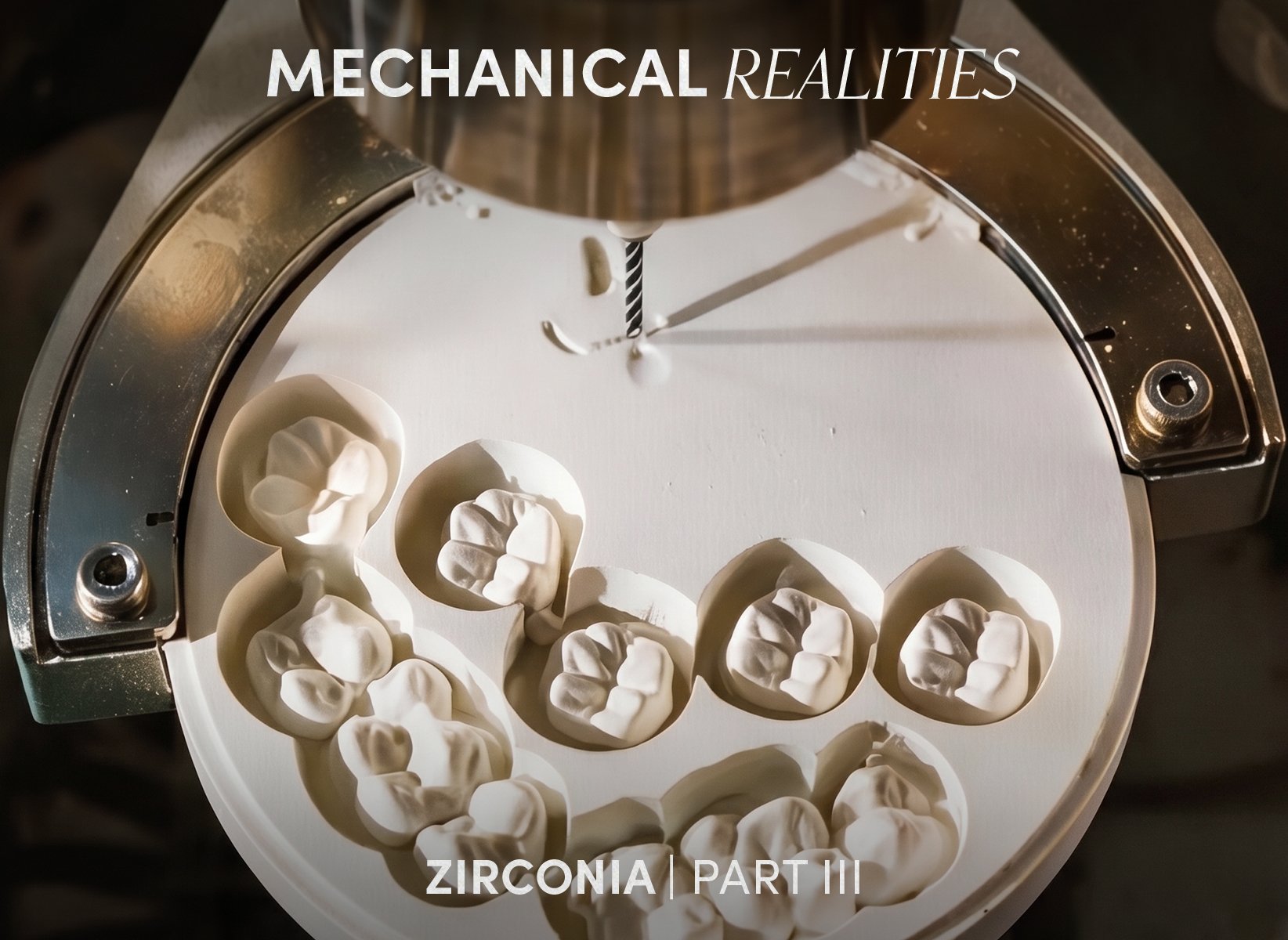
Zirconia is denser than acrylic-based alternatives. That fact is often cited as a reason full-arch zirconia restorations feel heavy. Density alone, however, does not determine weight. Volume does.
From an engineering standpoint, mass equals density multiplied by volume. Zirconia’s density is fixed. The volume of a restoration is entirely controlled by design decisions.
In AOX prosthetics, excessive mass typically results from inadequate prosthetic space management, over-contouring, or compensating for lost anatomy with bulk. Zirconia simply makes that bulk unavoidable. If a zirconia restoration feels heavy, the underlying issue is not the material. It is the amount of material required to achieve the intended form.
This distinction matters because excess volume does more than increase mass. It alters load paths, increases bending moments, complicates hygiene, and concentrates stress in transition zones. These effects influence longevity far more than the sensation of weight itself.
Zirconia does not require bulk to be strong. Poor planning does. When prosthetic space is respected and contours are disciplined, zirconia restorations can be both strong and efficient. When space is violated, mass becomes a symptom of compromised geometry. Weight complaints often mask deeper mechanical issues such as unfavorable leverage, excessive cantilevers, or compromised support distribution. Addressing material density does not resolve those problems. Addressing design does.
The relevant engineering question is not how much the restoration weighs, but how efficiently it transmits force.